Companies in the industrial sector face high production costs due to their high energy consumption, affecting not only their economic profitability but also the environment. Fortunately, this sector has some room for improvement in terms of energy efficiency.
StreamSTEP was created to optimize thermal energy management in industry, minimizing losses and using energy more efficiently in its different processes. The solution, which has 31 European partners, including us as a technology partner, will have five demonstrators from different industrial sectors.
What is StreamSTEP?
StreamSTEP is an innovation project funded with almost 16 million euros by the European Union, involving nine countries and implemented in four of them: Italy, Norway, Greece and two cities in Spain.
During the four years of the project, thermal energy management within industrial processes will be improved, with temperatures ranging from 135 °C to more than 1400 °C. Large energy consumers will benefit from the solution, including companies in the copper, refining, ceramics, silicon and plastics sectors.
Under the coordination of the Norwegian research institute SINTEF, these five pilots will develop: heat pumps capable of reaching 200°C temperature, high-efficiency heat exchangers and materials resistant to extreme temperatures for use in manufacturing processes, among others.
Innovations that will achieve energy efficiency
In order to achieve better management of heat recovery and reuse processes, the following technologies will be developed:
- Digital Twins: using data collected by sensors, virtual models will be applied to simulate and optimize industrial processes.
- Advanced manufacturing strategies: various 3D printing techniques will be used to build components with lower material and energy consumption.
- Advanced heat exchangers: five prototype heat exchangers will be developed capable of operating in demanding industrial environments, achieving a waste heat recovery rate between 50% - 90%.
- High-temperature heat pumps: the operation of heat pumps will be improved, increasing their operating range to 215ºC.
- Other tools: On the one hand, the system will allow industrial plants to better interact with the electrical and thermal grid, adjusting their energy consumption and production according to demand.
On the other hand, innovative strategies will be adopted to reuse waste heat, such as selling it to other companies through a thermal PPA or Heat Purchase Agreement (HPA).
In addition, it will be possible to predict the behavior and monitor the performance of thermal systems in real time and receive recommendations to improve their energy efficiency.
Our role in STREAMSTEP
Given our experience in the electricity sector, we lead and develop the work on thermal power purchase agreements (HPA). An HPA is a contract between a producer and a consumer of thermal energy for the purchase and sale of waste heat.
As a technology partner, we will study the different situations in which waste heat can be used and their feasibility for the five European demonstrators. Based on these analyses, we will develop the optimal thermal power purchase agreement for each case.
These agreements are key to the StreamSTEP business model, as they promote the recovery and sustainable utilization of waste heat.
Two of the pilots in Spain
The project solution will be validated in two areas of Spain:
- Torrecid ceramics factory, located in Castellón: In this industry, the kiln exhaust gases, which reach temperatures of 800ºC, will be used to feed the kiln inlet heat. To this end, a heat exchanger capable of managing these gases will be developed. Versatility will be one of the qualities of this technology, since it will be designed to be implemented in different processes according to the needs of each moment.
These innovations will recover more than 80% of the heat lost in the process and reduce carbon dioxide emissions by 510 tons per year.
- Repsol Refinery, located in Galicia: In this case, the outlet temperature of the heat pumps will be increased to 215ºC. To achieve this, the heat from the exhaust streams will be used to boil the working fluid of the heat pump. In addition, detailed monitoring and analysis of the operation of this equipment will be carried out. From this data, a digital twin will be developed to optimize its performance and efficiency.
Through these actions, thermal energy will be harnessed, reducing energy consumption to 200 GWh/year and carbon dioxide emissions by 35,500 tons per year.
Project status
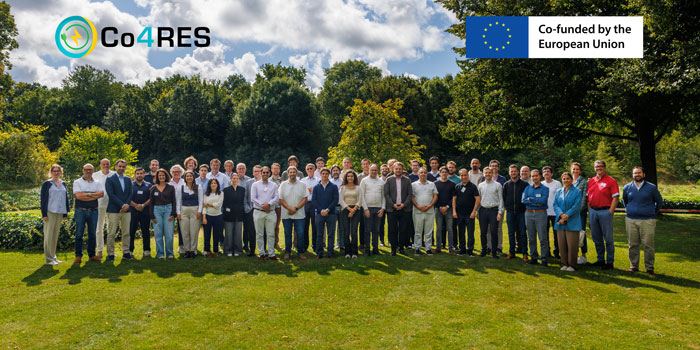
StreamSTEP kicked off in November 2024 with the first meeting in Norway, where the objectives of the project, the partners involved and the working methodology, among other aspects, were presented.

Throughout these months, the consortium is laying the foundations and studying the facilities for the development of the technologies. All these advances and next steps for the development of the solution will be presented at the second meeting, which will take place in June this year in Greece.